



- Overview
- Block Elements
- Span Elements
- Miscellaneous
The syntax phrase (synph ) element can be used to describe elements and attributes in a mark-up language. When documenting XML mark-up languages, you should use the syntax phrase (synph) element.
Note: This document is itself written using Markdown; youcan see the source for it by adding ‘.text’ to the URL.
Razor is a markup syntax for embedding server-based code into webpages. The Razor syntax consists of Razor markup, C#, and HTML. Files containing Razor generally have a.cshtml file extension. Razor is also found in Razor components files (.razor). The default Razor language is HTML. Post displaying the various ways of highlighting code in Markdown.
Overview
Philosophy
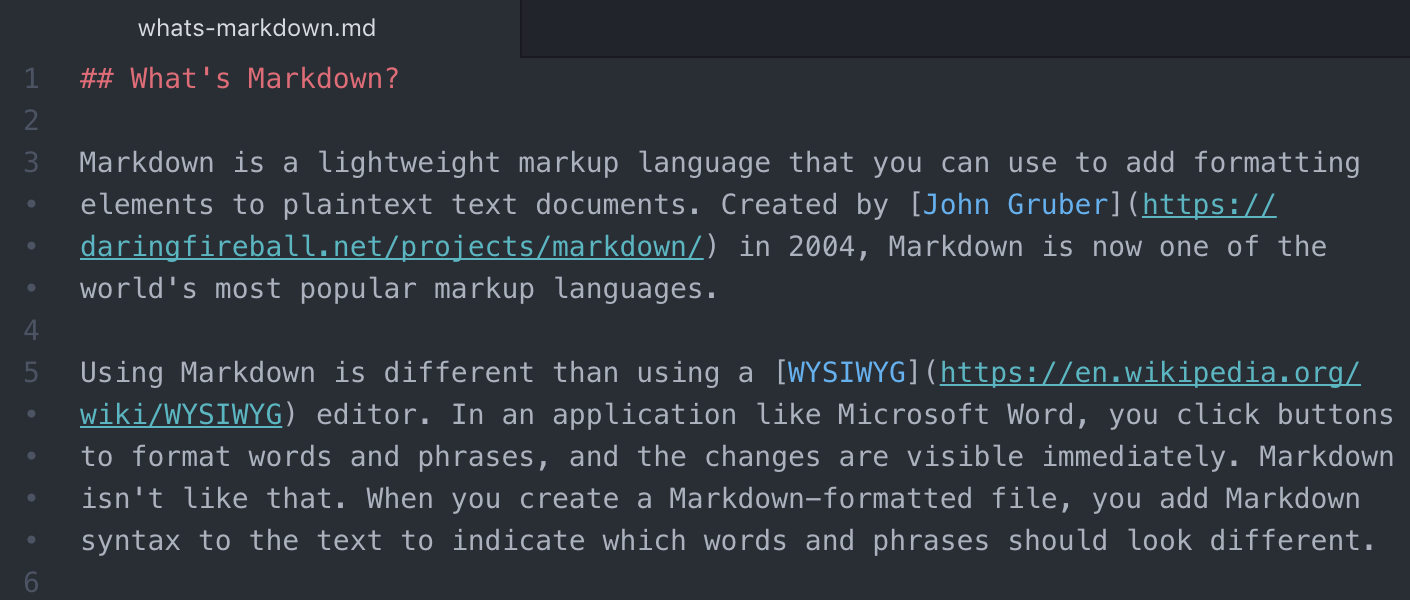
Markdown is intended to be as easy-to-read and easy-to-write as is feasible.
Readability, however, is emphasized above all else. A Markdown-formatteddocument should be publishable as-is, as plain text, without lookinglike it’s been marked up with tags or formatting instructions. WhileMarkdown’s syntax has been influenced by several existing text-to-HTMLfilters — including Setext, atx, Textile, reStructuredText,Grutatext, and EtText — the single biggest source ofinspiration for Markdown’s syntax is the format of plain text email.
To this end, Markdown’s syntax is comprised entirely of punctuationcharacters, which punctuation characters have been carefully chosen soas to look like what they mean. E.g., asterisks around a word actuallylook like *emphasis*. Markdown lists look like, well, lists. Evenblockquotes look like quoted passages of text, assuming you’ve everused email.
Inline HTML
Markdown’s syntax is intended for one purpose: to be used as aformat for writing for the web.
Markdown is not a replacement for HTML, or even close to it. Itssyntax is very small, corresponding only to a very small subset ofHTML tags. The idea is not to create a syntax that makes it easierto insert HTML tags. In my opinion, HTML tags are already easy toinsert. The idea for Markdown is to make it easy to read, write, andedit prose. HTML is a publishing format; Markdown is a writingformat. Thus, Markdown’s formatting syntax only addresses issues thatcan be conveyed in plain text.
For any markup that is not covered by Markdown’s syntax, you simplyuse HTML itself. There’s no need to preface it or delimit it toindicate that you’re switching from Markdown to HTML; you just usethe tags.
The only restrictions are that block-level HTML elements — e.g. <div>,<table>, <pre>, <p>, etc. — must be separated from surroundingcontent by blank lines, and the start and end tags of the block shouldnot be indented with tabs or spaces. Markdown is smart enough notto add extra (unwanted) <p> tags around HTML block-level tags.
For example, to add an HTML table to a Markdown article:
Note that Markdown formatting syntax is not processed within block-levelHTML tags. E.g., you can’t use Markdown-style *emphasis* inside anHTML block.
Span-level HTML tags — e.g. <span>, <cite>, or <del> — can beused anywhere in a Markdown paragraph, list item, or header. If youwant, you can even use HTML tags instead of Markdown formatting; e.g. ifyou’d prefer to use HTML <a> or <img> tags instead of Markdown’slink or image syntax, go right ahead.
Unlike block-level HTML tags, Markdown syntax is processed withinspan-level tags.
Automatic Escaping for Special Characters
In HTML, there are two characters that demand special treatment: <and &. Left angle brackets are used to start tags; ampersands areused to denote HTML entities. If you want to use them as literalcharacters, you must escape them as entities, e.g. <, and&.
Ampersands in particular are bedeviling for web writers. If you want towrite about ‘AT&T’, you need to write ‘AT&T’. You even need toescape ampersands within URLs. Thus, if you want to link to:

you need to encode the URL as:
in your anchor tag href attribute. Needless to say, this is easy toforget, and is probably the single most common source of HTML validationerrors in otherwise well-marked-up web sites.
Markdown allows you to use these characters naturally, taking care ofall the necessary escaping for you. If you use an ampersand as part ofan HTML entity, it remains unchanged; otherwise it will be translatedinto &.
So, if you want to include a copyright symbol in your article, you can write:
and Markdown will leave it alone. But if you write:
Markdown will translate it to:
Similarly, because Markdown supports inline HTML, if you useangle brackets as delimiters for HTML tags, Markdown will treat them assuch. But if you write:
Markdown will translate it to:
However, inside Markdown code spans and blocks, angle brackets andampersands are always encoded automatically. This makes it easy to useMarkdown to write about HTML code. (As opposed to raw HTML, which is aterrible format for writing about HTML syntax, because every single <and & in your example code needs to be escaped.)
Block Elements
Paragraphs and Line Breaks
A paragraph is simply one or more consecutive lines of text, separatedby one or more blank lines. (A blank line is any line that looks like ablank line — a line containing nothing but spaces or tabs is consideredblank.) Normal paragraphs should not be indented with spaces or tabs.
The implication of the “one or more consecutive lines of text” rule isthat Markdown supports “hard-wrapped” text paragraphs. This differssignificantly from most other text-to-HTML formatters (including MovableType’s “Convert Line Breaks” option) which translate every line breakcharacter in a paragraph into a <br /> tag.
When you do want to insert a <br /> break tag using Markdown, youend a line with two or more spaces, then type return.
Yes, this takes a tad more effort to create a <br />, but a simplistic“every line break is a <br />” rule wouldn’t work for Markdown.Markdown’s email-style blockquoting and multi-paragraph list itemswork best — and look better — when you format them with hard breaks.
Headers
Markdown supports two styles of headers, Setext and atx.
Setext-style headers are “underlined” using equal signs (for first-levelheaders) and dashes (for second-level headers). For example:
Any number of underlining =’s or -’s will work.
Atx-style headers use 1-6 hash characters at the start of the line,corresponding to header levels 1-6. For example:
Optionally, you may “close” atx-style headers. This is purelycosmetic — you can use this if you think it looks better. Theclosing hashes don’t even need to match the number of hashesused to open the header. (The number of opening hashesdetermines the header level.) :
Blockquotes
Markdown uses email-style > characters for blockquoting. If you’refamiliar with quoting passages of text in an email message, then youknow how to create a blockquote in Markdown. It looks best if you hardwrap the text and put a > before every line:
Markdown allows you to be lazy and only put the > before the firstline of a hard-wrapped paragraph:
Blockquotes can be nested (i.e. a blockquote-in-a-blockquote) byadding additional levels of >:
Blockquotes can contain other Markdown elements, including headers, lists,and code blocks:
Any decent text editor should make email-style quoting easy. Forexample, with BBEdit, you can make a selection and choose IncreaseQuote Level from the Text menu.
Lists
Markdown supports ordered (numbered) and unordered (bulleted) lists.
Unordered lists use asterisks, pluses, and hyphens — interchangably — as list markers:
is equivalent to:
and:
Ordered lists use numbers followed by periods:
It’s important to note that the actual numbers you use to mark thelist have no effect on the HTML output Markdown produces. The HTMLMarkdown produces from the above list is:
If you instead wrote the list in Markdown like this:
or even:
you’d get the exact same HTML output. The point is, if you want to,you can use ordinal numbers in your ordered Markdown lists, so thatthe numbers in your source match the numbers in your published HTML.But if you want to be lazy, you don’t have to.
If you do use lazy list numbering, however, you should still start thelist with the number 1. At some point in the future, Markdown may supportstarting ordered lists at an arbitrary number.
List markers typically start at the left margin, but may be indented byup to three spaces. List markers must be followed by one or more spacesor a tab.
To make lists look nice, you can wrap items with hanging indents:
But if you want to be lazy, you don’t have to:
If list items are separated by blank lines, Markdown will wrap theitems in <p> tags in the HTML output. For example, this input:
will turn into:
But this:
will turn into:
List items may consist of multiple paragraphs. Each subsequentparagraph in a list item must be indented by either 4 spacesor one tab:
It looks nice if you indent every line of the subsequentparagraphs, but here again, Markdown will allow you to belazy:
To put a blockquote within a list item, the blockquote’s >delimiters need to be indented:
To put a code block within a list item, the code block needsto be indented twice — 8 spaces or two tabs:
It’s worth noting that it’s possible to trigger an ordered list byaccident, by writing something like this:
In other words, a number-period-space sequence at the beginning of aline. To avoid this, you can backslash-escape the period:
Code Blocks
Pre-formatted code blocks are used for writing about programming ormarkup source code. Rather than forming normal paragraphs, the linesof a code block are interpreted literally. Markdown wraps a code blockin both <pre> and <code> tags.
To produce a code block in Markdown, simply indent every line of theblock by at least 4 spaces or 1 tab. For example, given this input:
Markdown will generate:
One level of indentation — 4 spaces or 1 tab — is removed from eachline of the code block. For example, this:
will turn into:
A code block continues until it reaches a line that is not indented(or the end of the article).
Within a code block, ampersands (&) and angle brackets (< and >)are automatically converted into HTML entities. This makes it veryeasy to include example HTML source code using Markdown — just pasteit and indent it, and Markdown will handle the hassle of encoding theampersands and angle brackets. For example, this:
will turn into:
Regular Markdown syntax is not processed within code blocks. E.g.,asterisks are just literal asterisks within a code block. This meansit’s also easy to use Markdown to write about Markdown’s own syntax.
Horizontal Rules
You can produce a horizontal rule tag (<hr />) by placing three ormore hyphens, asterisks, or underscores on a line by themselves. If youwish, you may use spaces between the hyphens or asterisks. Each of thefollowing lines will produce a horizontal rule:
Span Elements
Links
Markdown supports two style of links: inline and reference.
In both styles, the link text is delimited by [square brackets].
To create an inline link, use a set of regular parentheses immediatelyafter the link text’s closing square bracket. Inside the parentheses,put the URL where you want the link to point, along with an optionaltitle for the link, surrounded in quotes. For example:
Will produce:
If you’re referring to a local resource on the same server, you canuse relative paths:
Reference-style links use a second set of square brackets, insidewhich you place a label of your choosing to identify the link:
You can optionally use a space to separate the sets of brackets:
Then, anywhere in the document, you define your link label like this,on a line by itself:
That is:
- Square brackets containing the link identifier (optionallyindented from the left margin using up to three spaces);
- followed by a colon;
- followed by one or more spaces (or tabs);
- followed by the URL for the link;
- optionally followed by a title attribute for the link, enclosedin double or single quotes, or enclosed in parentheses.
The following three link definitions are equivalent:
Note: There is a known bug in Markdown.pl 1.0.1 which preventssingle quotes from being used to delimit link titles.
The link URL may, optionally, be surrounded by angle brackets:
You can put the title attribute on the next line and use extra spacesor tabs for padding, which tends to look better with longer URLs:
Link definitions are only used for creating links during Markdownprocessing, and are stripped from your document in the HTML output.
Link definition names may consist of letters, numbers, spaces, andpunctuation — but they are not case sensitive. E.g. these twolinks:
are equivalent.
The implicit link name shortcut allows you to omit the name of thelink, in which case the link text itself is used as the name.Just use an empty set of square brackets — e.g., to link the word“Google” to the google.com web site, you could simply write:
And then define the link:
Because link names may contain spaces, this shortcut even works formultiple words in the link text:
And then define the link:
Link definitions can be placed anywhere in your Markdown document. Itend to put them immediately after each paragraph in which they’reused, but if you want, you can put them all at the end of yourdocument, sort of like footnotes.
Here’s an example of reference links in action:
Using the implicit link name shortcut, you could instead write:
Both of the above examples will produce the following HTML output:
For comparison, here is the same paragraph written usingMarkdown’s inline link style:
The point of reference-style links is not that they’re easier towrite. The point is that with reference-style links, your documentsource is vastly more readable. Compare the above examples: usingreference-style links, the paragraph itself is only 81 characterslong; with inline-style links, it’s 176 characters; and as raw HTML,it’s 234 characters. In the raw HTML, there’s more markup than thereis text.
With Markdown’s reference-style links, a source document much moreclosely resembles the final output, as rendered in a browser. Byallowing you to move the markup-related metadata out of the paragraph,you can add links without interrupting the narrative flow of yourprose.
Emphasis
Markdown treats asterisks (*) and underscores (_) as indicators ofemphasis. Text wrapped with one * or _ will be wrapped with anHTML <em> tag; double *’s or _’s will be wrapped with an HTML<strong> tag. E.g., this input:
will produce:
You can use whichever style you prefer; the lone restriction is thatthe same character must be used to open and close an emphasis span.
Emphasis can be used in the middle of a word:
But if you surround an * or _ with spaces, it’ll be treated as aliteral asterisk or underscore.
To produce a literal asterisk or underscore at a position where itwould otherwise be used as an emphasis delimiter, you can backslashescape it:
Code
To indicate a span of code, wrap it with backtick quotes (`).Unlike a pre-formatted code block, a code span indicates code within anormal paragraph. For example:
will produce:
To include a literal backtick character within a code span, you can usemultiple backticks as the opening and closing delimiters:
which will produce this:
The backtick delimiters surrounding a code span may include spaces — one after the opening, one before the closing. This allows you to placeliteral backtick characters at the beginning or end of a code span:
will produce:
With a code span, ampersands and angle brackets are encoded as HTMLentities automatically, which makes it easy to include example HTMLtags. Markdown will turn this:
into:
You can write this:
to produce:
Images
Admittedly, it’s fairly difficult to devise a “natural” syntax forplacing images into a plain text document format.
Markdown uses an image syntax that is intended to resemble the syntaxfor links, allowing for two styles: inline and reference.
Inline image syntax looks like this:
That is:
- An exclamation mark:
!; - followed by a set of square brackets, containing the
altattribute text for the image; - followed by a set of parentheses, containing the URL or path tothe image, and an optional
titleattribute enclosed in doubleor single quotes.
Reference-style image syntax looks like this:
Where “id” is the name of a defined image reference. Image referencesare defined using syntax identical to link references:
As of this writing, Markdown has no syntax for specifying thedimensions of an image; if this is important to you, you can simplyuse regular HTML <img> tags.
Miscellaneous
Automatic Links
Markdown supports a shortcut style for creating “automatic” links for URLs and email addresses: simply surround the URL or email address with angle brackets. What this means is that if you want to show the actual text of a URL or email address, and also have it be a clickable link, you can do this:
Markdown will turn this into:
Automatic links for email addresses work similarly, except thatMarkdown will also perform a bit of randomized decimal and hexentity-encoding to help obscure your address from address-harvestingspambots. For example, Markdown will turn this:
into something like this:
which will render in a browser as a clickable link to “[email protected]”.
(This sort of entity-encoding trick will indeed fool many, if notmost, address-harvesting bots, but it definitely won’t fool all ofthem. It’s better than nothing, but an address published in this waywill probably eventually start receiving spam.)
Backslash Escapes
Markdown allows you to use backslash escapes to generate literalcharacters which would otherwise have special meaning in Markdown’sformatting syntax. For example, if you wanted to surround a wordwith literal asterisks (instead of an HTML <em> tag), you can usebackslashes before the asterisks, like this:
Markdown provides backslash escapes for the following characters:
An Application Conforming to InternationalStandard ISO 8879 -- Standard GeneralizedMarkup Language
About of this Document
This document describes the currentpractice and current proposals forfuture standardisation of HTML, asa basis for review and enhancement.The document is a draft form ofa standard for interchange of informationon the network which is proposedto be registered as a MIME (RFC1521)content type.
Please send comments to connolly@hal.comor the discussion list www-html@info.cern.ch.
Version
This is version 2.0 of this document.It introduces forms for user inputof information. This feature is knownas a level 2 feature of HTML. Allother specified features are knownas level 1 features. Features ofhigher levels which are under discussion,(such as tables, figures, and mathematicalformulae) where mentioned are describedas 'proposed'.The latest version of this documentis currently available in hypertexton the World-Wide Web as http://www.w3.org/hypertext/WWW/MarkUp/HTML.html
Abstract
HyperText Markup Language (HTML)can be used to represent- Hypertext news, mail, online documentation,and collaborative hypermedia;
- Menus of options;
- Database query results;
- Simple structured documents withinlined graphics.
- Hypertext views of existing bodiesof information
HTML is proposed as a MIME contenttype.
HTML refers to the URI specificationRFCxxxx.
Implementations of HTML parsers andgenerators can be found in the variousW3 servers and browsers, in the publicdomain W3 code, and may also be builtusing various public domain SGMLparsers such as [SGMLS] . HTML documentsare SGML documents with fairly genericsemantics appropriate for representinginformation from a wide range ofapplications.
Status of this memo
This document is an Internet Draft.Internet Drafts are working documentsof the Internet Engineering TaskForce (IETF), its Areas, and itsWorking Groups. Note that othergroups may also distribute workingdocuments as Internet Drafts.Internet Drafts are working documentsvalid for a maximum of six months.Internet Drafts may be updated, replaced,or obsoleted by other documents atany time. It is not appropriateto use Internet Drafts as referencematerial or to cite them other thanas a 'working draft' or 'work inprogress'.
Distribution of this document isunlimited.
Vocabulary
This specification uses the wordsbelow with the precise meaning given.- Representation
- The encoding of informationfor interchange. For example, HTMLis a representation of hypertext.
- Rendering
- The form of presentationto information to the human reader.
Imperatives
- may
- The implementation is not obligedto follow this in any way.
- must
- If this is not followed, theimplementation does not conform tothis specification.
- shall
- as 'must'
- should
- If this is not followed, thoughthe implementation officially conformsto the standard, undesirable resultsmay occur in practice.
- typical
- Typical rendering is describedfor many elements. This is not amandatory part of the standard butis given as guidance for designersand to help explain the uses forwhich the elements were intended.
Notes
Sections marked 'Note:' are not mandatoryparts of the specification but forguidance only.Status of features
- Mandatory
- These features must beimplemented in the rendering. Featuresare mandatory unless otherwise mentioned.
- Optional
- Standard HTML features whichmay safely be ignored by parsers.It is legal to ignore these, treatthe contents as though the tags werenot there. (e.g. EM, and processinginstructions) . Authors should beawarethat these features may be ignoredby some applications.
- Proposed
- The specification of thesefeatures is not final. They shouldnot be regarded as part ofthe standard,but indicate possible directionsfor future versions.
- Obsolete
- Not standard HTML. Parsersshould implement these features asfar as possible in order to preserveback-compatibility with previousversions of this specification.
- MIME Type name
- text
- MIME subtype name:
- html
- Required parameters:
- none
- Optional parameters:
- level, version,charset
Level
The level parameter specifies thefeature set which is used in thedocument. The level is an integernumber, implying that any featuresof same or lower level may be presentin the document. Levels are definedby this specification.Version
In order to help avoid future compatibilityproblems, the version parameter maybe used to give the version numberof this specification to which thedocument conforms. The versionnumber appears at the front of thisdocument and within public identifierfor the SGML DTD.Character sets
The base character set (the SGMLBASESET) for HTML is ISO Latin-1.This is the set referred to by anynumeric character references . Theactual character set used in therepresentation of an HTML documentmay be ISO Latin 1, or its 7-bitsubset which is ASCII. There is noobligation for an HTML document tocontain any characters above decimal127. It is possible that a transportmedium such as electronic mail imposesconstraints on the number of bitsin a representation of a document,though the HTTP access protocol usedby W3 always allows 8 bit transfer.When an HTML document is encodedusing 7-bit characters, then themechanisms of character referencesand entity references may be usedto encode characters in the upperhalf of the ISO Latin-1 set. In thisway, documents may be prepared whichare suitable for mailing through7-bit limited systems.
Character set option (proposed)
The SGML declaration specified ISOLatin 1 as the base character set.The charset parameter is reservedfor future use. Its intended significanceis to override the base characterset of the SGML declaration. Supportof character sets other than ISO-Latin-1is not a requirement for conformancewith this specification. This section describes the relationshipbetween HTML and SGML, and guidesthe newcomer through interpretationof the DTD . (This is not a fulltutorial on SGML, and in the eventof any apparent conflict, the SGMLstandard is definitive.)The HyperText Markup Language isan application conforming to InternationalStandard ISO 8879 -- Standard GeneralizedMarkup Language [ SGML ]. SGML isa system for defining structureddocument types, and markup languagesto represent instances of those documenttypes.
Every SGML document has three parts:
- An SGML declaration, which bindsSGML processing quantities and syntaxtoken names to specific values. Forexample, the SGML declaration inthe HTML DTD specifies that the stringthat opens a tag is </ and the maximumlength of a name is 34 characters.
- A prologue including one or moredocument type declarations, whichspecifiy the element types, elementrelationships and attributes, andreferences that can be representedby markup. The HTML DTD specifies,for example, that the HEAD elementcontains at most one TITLE element.
- An instance, which contains the dataand markup of the document.
The SGML declaration for HTML isgiven in the appendix ``SGML Delcarationfor HTML.' It is implicit amongWWW implementations.
The prologue for an HTML documentshould look like:
- NOTE 2:
- Many extant HTML documentsdo not contain a prologue. Implementationsare encouraged to infer the aboveprologue if the document does notbegin with <! .
Structured Text
An HTML instance is like a text file,except that some of the charactersare interpreted as markup. The markupgives structure to the document.The instance represents a hierarchyof elements. Each element has a name, some attributes , and some content.Most elements are represented inthe document as a start tag, whichgives the name and attributes, followedby the content, followed by the endtag. For example:Some elements (e.g. BR ) are empty.They have no content. They show upas just a start tag.
For the rest of the elements, thecontent is a sequence of data charactersand nested elements. Some thingssuch as forms and anchors cannotbe nested, in which case this ismentioned in the text. Anchors andcharacter highlighting may be putinside other constructs.
Tags
Most elements start and end withtags. Empty elements have no endtag. Start tags are delimited by<and >, and end tags are delimitedby </ and >. For example:The following are not valid tags:- NOTE:
- The SGML declaration for HTMLspecifies SHORTTAG YES , which meansthat there are some other valid syntaxesfor tags, e.g. NET tags: <em/.../, empty start tags: <> , empty endtags: </> . Until such time as supportfor these idioms is widely deployed,their use is strongly discouraged.
Names
The element name immediately followsthe tag open delimiter. Names consistof a letter followed by up to 33letters, digits, periods, or hyphens.Names are not case sensitive. Forexample:Attributes
In a start tag, whitespace and attributesare allowed between the element nameand the closing delimiter. An attributeconsists of a name, an equal sign,and a value. Whitespace is allowedaround the equal sign.The value is either:
- A string literal, delimited by singlequotes or double quotes, or
- A name token; that is, a sequenceof letters, digits, periods, or hyphens.
- NOTE 1:
- Some implementations allowedany character except space or '>'in a name token, for example <A HREF=foo/bar.html>. As a result, there are many documentsthat contain attribute values thatshould be quoted but are not. Whileparser implementators are encouragedto support this idiom, its use infuture documents is stictly prohibited.
- NOTE 2:
- Some implementations alsoconsider any occurence of the > characterto signal the end of a tag. For compatibilitywith such implementations, it maybe necessary to represent > withan entity or numeric character reference;for example: <IMG SRC='eq1.ps' ALT='a> b'>
Undefined tag and attribute names
It is a principle to be conservativein that which one produces, and liberalin that which one accepts. HTMLparsers should be liberal exceptwhen verifying code. HTML generatorsshould generate strictly conformingHTML.The behaviour of WWW applicationsreading HTML documents and discoveringtag or attribute names which theydo not understand should be to behaveas though, in the case of a tag,the whole tag had not been therebut its content had, or in the caseof an attribute, that the attributehad not been present.
Character Data
The charcters between the tags representtext in the ISO-Latin-1 characterset, which is a superset of ASCII.Because certain characters will beinterpreted as markup, they shouldbe 'escaped'; that is, representedby markup -- entity or numeric characterreferences. For example:The HTML DTD includes entities foreach of the non-ASCII charactersso that one may reference them byname if it is inconvenient to enterthem directly:- NOTE 1:
- To ensure that a string ofcharacters has no markup, it is sufficientto represent all occurrences of <, > , and & by character or entityreferences.
- NOTE 2:
- There are SGML features (CDATA , RCDATA ) to allow most <, > , and & characters to be enteredwithout the use of entity or characterreferences. Because these featurestend to be used and implemented inconsistently,and because they require 8-bit charactersto represent non-ASCII characters,they are not employed in this versionof the HTML DTD. An earlier HTMLspecification included an XMP elementwhose syntax is not expressible inSGML. Inside the XMP , no markupwas recognized except the </XMP>end tag. While implementations areencouraged to support this idiom,its use is obsolete.
Comments
To include comments in an HTML documentthat will be ignored by the parser,surround them with <!-- and -->.After the comment delimiter, alltext up to the next occurrence of-- is ignored. Hence comments cannotbe nested. Whitespace is allowedbetween the closing -- and >. (Butnot between the opening <! and --.)For example:
- Note 3:
- Some historical implementationsincorrectly consider a > sign toterminate a comment.
The HTML Document Element
An HTML document is organized asa HEAD and a BODY, much like memoor a mail message: The HEAD element is an small unorderedcollection of information about thedocument, whereas the BODY is anordered sequence of information elementsof arbitrary length. This organizationallows an implementation to determinecertain properties of a document-- the title, for example -- withoutparsing the entire document.Information in the HEAD Element
- TITLE
- The title of the document
- ISINDEX
- Sent by a server in a searchabledocument
- NEXTID
- A parameter used by editorsto generate unique identifiers
- LINK
- Relationship between this documentand another. See also the Anchorelement , Relationships . A documentmay have many LINK elements.
- BASE
- A record of the URL of the documentwhen saved
Proposed head elements
- EXPIRES
- The date after which thedocument is invalid. Semantics asin the HTTP specification.
Obsolete head elements
- META
- A wrapper for an HTTP element
Body Elements (level 1)
The order of the contents of theBODY element should be preservedwhen it is rendered on the outputdevice.Hypertext Anchors
- Anchors
- Sections of text which formthe beginning and/or end of hypertextlinks are called 'anchors' and definedby the A tag.
Block Elements
These elements typically stack verticallyin the rendered flow of text. Whitespacebetween them is ignored.- Headings
- Several levels of headingare supported.
- Paragraph
- The P element representsa paragraph.
- Horizontal Rule
- A horizontal dividingline
- Address style
- Used to represent authorshipor status of a document
- Blockquote style
- A block of textquoted from another source.
- Lists
- Bulleted lists, glossaries,etc.
- Preformatted text
- Sections in fixed-widthfont for preformatted text.
Inline Elements
These elements fall left to rightin the rendered flow of text. Whitespacebetween them separates words, exceptin the PRE element, where it hasits literal ASCII meaning.- Special Phrases
- Emphasis, typographicdistinctions, etc.
- Line Breaks
- Indicates a line breakin a flow of text.
- IMG
- The IMG tag allows inline graphics.
Body elements (level 2)
Elements for forms
The FORM element and various otherelements allowed only within it describeforms which allow user input.- FORM elements
- FORM, INPUT, SELECT,OPTION, TEXTAREA, etc
Obsolete elements
The other elements are obsolete butshould be recognised by parsers forback-compatibility.HEAD
The HEAD element contains all informationabout the document in general. Itdoes not contain any text which ispart of the document: this is inthe BODY . Within the head element,only certain elements are allowed.BODY
The BODY element contains all theinformation which is part of thedocument, as opposed informationabout the document which is in theHEAD .The elements within the BODY elementare in the order in which they shouldbe presented to the reader.
See the list of things which areallowed within a BODY element .
Anchors
An anchor is a piece of text whichmarks the beginning and/or the endof a hypertext link.The text between the opening tagand the closing tag is either thestart or destination (or both) ofa link. Attributes of the anchortag are as follows.
- HREF
- OPTIONAL. If the HREF attributeis present, the anchor is sensitivetext: the start of a link. If thereader selects this text, (s)he shouldbe presented with another documentwhose network address is definedby the value of the HREF attribute. The format of the network addressis specified elsewhere . This allowsfor the form HREF='#identifier' torefer to another anchor in the samedocument. If the anchor is in anotherdocument, the attribute is a relativename , relative to the documentsaddress (or specified base addressif any). @@NOTE:
- This refers to theURI specification, which does notcover relative addresses. There isno specification of how to distinguishrelative addresses from absoluteaddresses.
- NAME
- OPTIONAL. If present, the attributeNAME allows the anchor to be thedestination of a link. The valueof the attribute is an identifierfor the anchor. Identifiers are arbitrarystrings but must be unique withinthe HTML document. Another documentcan then make a reference explicitlyto this anchor by putting the identifierafter the address, separated by ahash sign . @@NOTE:
- This featureis representable in SGML as an IDattribute, if we restrict the identifiersto be SGML names .
- REL
- OPTIONAL. An attribute REL maygive the relationship (s) describedby the hypertext link. The valueis a comma-separated list of relationshipvalues. Values and their semanticswill be registered by the HTML registrationauthority . The default relationshipif none other is given is void. RELshould not be present unless HREFis present. See Relationship values, REV .
- REV
- OPTIONAL. The same as REL , butthe semantics of the link type arein the reverse direction. A linkfrom A to B with expressesthe same relationship as a link fromB to A with REV='X'. An anchor mayhave both REL and REV attributes.
- URN
- OPTIONAL. If present, this specifiesa uniform resource number for thedocument. See note .
- TITLE
- OPTIONAL. This is informationalonly. If present the value of thisfield should equal the value of theTITLE of the document whose addressis given by the HREF attribute. Seenote .
- METHODS
- OPTIONAL. The value of thisfield is a string which if presentmust be a comma separated list ofHTTP METHODS supported by the objectfor public use. See note .
Example of use:
Address
This element is for address information,signatures, authorship, etc, oftenat the top or bottom of a document.Typical rendering
Typically, an address element isitalic and/or right justified orindented. The address element impliesa paragraph break. Paragraph markswithin the address element do notcause extra white space to be inserted.Examples of use:
BASE
This element allows the URL of thedocument itself to be recorded insituations in which the documentmay be read out of context. URLswithin the document may be in a 'partial'form relative to this base address.Where the base address is not specified,the reader will use the URL it usedto access the document to resolveany relative URLs.
The one attribute is:
- HREF
- the URL
Line Break
The line break element marks thata new line must be started at thegiven point.Typical rendering
A new line with indent the same asthat of line-wrapped text.Examples
See also:
Paragraph marksBLOCKQUOTE
The BLOCKQUOTE element allows textquoted from another source to berendered specially.Typical rendering
A typical rendering might be a slightextra left and right indent, and/oritalic font. BLOCKQUOTE causes aparagraph break, and typically aline or so of white space will beallowed between it and any text beforeor after it.Single-font rendition may for exampleput a vertical line of '>' charactersdown the left margin to indicatequotation in the Internet mail style.
Example
Fill-out Forms and Input fields
Forms are composed by placing inputfields within paragraphs, preformatted/literaltext, lists and tables. This givesconsiderable scope in designing thelayout of forms. The form featuresuse the following elements whichare all known as HTML level 2 elements.- FORM
- a form within a document.
- INPUT
- one input field
- TEXTAREA
- a multline input field
- SELECT
- A selection from a finiteset of options
- OPTION
- one option within a SELECT
Servers can disable forms by sendingan appropriate header or by an attributeon the optional HTMLPLUS elementat the very start of the document,e.g. <htmlplus forms=off> .
Here, the <P> and <UL> elements havebeen used to lay out the text (andinput fields. The browser has changedthe background color within the FORMelement to distinguish the form fromother parts of the document. Thebrowser is responsible for handlingthe input focus, i.e. which fieldwill currently get keyboard input.
For many platforms there will beexisting conventions for forms, e.g.and shift- keys to move the keyboardfocus forwards and backwards betweenfields, while an key submits theform. In the example, the and buttonsare specified explicitly with specialpurpose fields. The button is usedto email the form or send its contentsto the server as specified by theACTION attribute, while the buttonresets the fields to their initialvalues. When the form consists ofa single text field, it may be appropriateto leave such buttons out and relyon the key.
The INPUT element is used for a largevariety of typed of input fields.
When you need to let users entermore than one line of text, you shoulduse the TEXTAREA element.
The RADIO and CHECKBOX types ofINPUT field can be used to specifymultiple choice forms in which everyalternative is visible as part ofthe form. An alternative is to usethe SELECT element which is generallyrendered in a more compact fashionas a pull down combo list.
FORM
The FORM element is used to delimitthe form . There can be several formsin a single document, but the FORMelement can't be nested.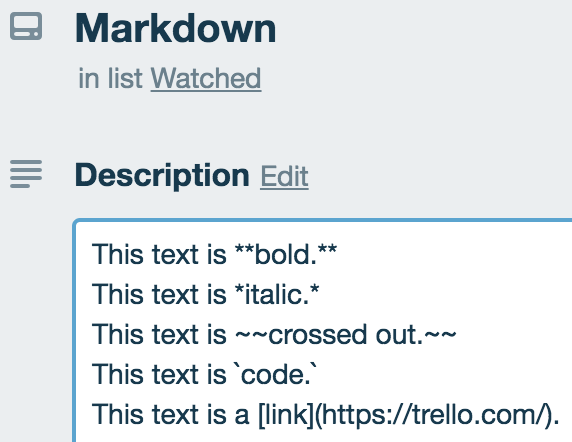
The ACTION attribute specifies aURL that designates an HTTP serveror an email address. If missing,the URL for the document itself willbe assumed. The effect of the actioncan be modified by including a methodprefix, e.g. ACTION='POST http://....'. This prefix is used to select theHTTP method when sending the form'scontents to an HTTP server. Wouldit be cleaner to use a separate attribute,e.g. METHOD ?
INPUT
The INPUT element represents a fieldwhose contents may be edited by theuser. It has the following attributes.- NAME
- Symbolic name used when transferringthe form's contents. This attributeis always needed and should uniquelyidentify this field.
- TYPE
- Defines the type of data thefield accepts. Defaults to free text.
- SIZE
- Specifies the size or precisionof the field according to its type.
- MAXLENGTH
- The maximum number of charactersthat will be accepted as input. Thiscan be greater that specified bySIZE , in which case the field willscroll appropriately. The defaultis unlimited.
- VALUE
- The initial value for the field,or the value when checked for checkboxesand radio buttons. This attributeis required for radio buttons.
- SRC
- A URL or URN specifying an image- for use only with TYPE=IMAGEMAP.
- ALIGN
- Vertical alignment of the image- for use only with TYPE=IMAGEMAP.
Propsed
- CHECKED
- When present indicates thata checkbox or radio button is selected.
- DISABLED
- When present indicates thatthis field is temporarily disabled.Browsers should show this by 'greyingit' out in some manner.
- ERROR
- When present indicates thatthe field's initial value is in errorin some way, e.g. because it is inconsistentwith the values of other fields.Servers should include an explanatoryerror message with the form's text.
Types
The following types of fields canbe defined with the TYPE attribute:Md Markup Language Syntax
- TEXT
- Single line text entry fields.Use the SIZE attribute to specifythe visible width in characters,e.g. SIZE='24' for a 24 characterfield. The MAX attribute can be usedto specify an upper limit to thenumber of characters that can beentered into a text field, e.g. MAX=72. Use the TEXTAREA element for textfields which can accept multiplelines (see below).
- HIDDEN
- No field is presented to theuser, but the content of the fieldis sent with the submitted form.This value may be used to transmitstate information about client/serverinteraction.
- CHECKBOX
- Used for simple Booleanattributes, or for attributes whichcan take multiple values at the sametime. The latter is represented bya number of checkbox fields eachof which has the same NAME .
- RADIO
- For attributes which can takea single value from a set of alternatives.Each radio button field in the groupshould be given the same NAME .
- SUBMIT
- This is a button that whenpressed submits the form. It offersauthors control over the locationof this button. You can use an imageas a submit button by specifyinga URL with the SRC attribute.
- RESET
- This is a button that whenpressed resets the form's fieldsto their initial values as specifiedby the VALUE attribute. You can usean image as a reeset button by specifyinga URL with the SRC attribute.
Proposed types
- RANGE
- This allows you to specifyan integer range with the MIN andMAX attributes, e.g. MIN=1 MAX=100. Users can select any value in thisrange.
- INT
- For entering integer numbers,the maximum number of digits canbe specified with the SIZE attribute(excluding the sign character), e.g.size=3 for a three digit number.
- FLOAT
- For fields which can acceptfloating point numbers.
- SCRIBBLE
- A field upon which you canwrite with a pen or mouse. The sizeof the field in millimeters is givenas SIZE= width , height. The unitsare absolute as they relate to thedimensions of the human hand, ratherthan pixels of varying resolution.The scribble may involve time andpressure data in addition to thebasic ink data. You can use scribblefor signatures or sketches. The fieldcan be initialised by setting theSRC attribute to a URL which containsthe ink *2 . The VALUE attributeis ignored.
- AUDIO
- This provides a way of enteringspoken messages into a form. Browsersmight show an icon which when clickedpops-up a set of tape controls thatyou can use to record and replaymessages. The initial message canbe set by specifying a URL with theSRC attribute. The VALUE attributeis ignored.
Obsolete types
DATE Fields which can accept a recognizeddate format.URL For fields which expect documentreferences as URLs or URNs.
- IMAGE
- This allows you to specifyan image field upon which you canclick with a pointing device. TheSRC and ALIGN attributes are exactlythe same as for the IMG and IMAGEelements. The symbolic names forthe x and y coordinates of the clickevent are specified with .x and .yfor the given with the NAME attribute.The VALUE attribute is ignored.
OPTION
The OPTION element can take the followingattributes:- SELECTED
- Indicates that this optionis initially selected.
- VALUE
- When present indicates thevalue to be returned if this optionis chosen. The returned value defaultsto the contents of the option element.
Proposed attributes
- DISABLED
- When present indicates thatthis option is temporarily disabled.Browsers should show this by 'greyingit'
SELECT
The SELECT element allows the userto chose one of a set of alternativesdescribed by textual labels, Everyalternative is represented by theOPTION element.Attributes
- MULTIPLE
- The MULTIPLE attribute isneeded when users are allowed tomake several selections, e.g. <SELECTMULTIPLE> .
Proposed attributes
- ERROR
- The ERROR attribute can beused to indicate that the initialselection is in error in some way,e.g. because it is inconsistent withthe values of other fields.
Typical rendering
SELECT is typically as a pull downor pop-up list.Example
e.g.
- out in some manner.
TEXTAREA
When you need to let users entermore than one line of text, you shoulduse the TEXTAREA element, e.g.The text up to the end tag is usedto initialize the field's value.This end tag is always required evenif the field is initially blank.The ROWS and COLS attributes determinethe visible dimension of the fieldin characters. Browsers are recommendedto allow text to grow beyond theselimits by scrolling as needed. Inthe initial design for forms, multi-linetext fields were supported by theINPUT element with TYPE=TEXT . Unfortunately,this causes problems for fields withlong text values as SGML limits thelength of attribute literals. TheHTML+ DTD allows for up to 1024 characters(the SGML default is only 240 characters!).Headings
Six levels of heading are supported.(Note that a hypertext node withina hypertext work tends to need fewerlevels of heading than a work whoseonly structure is given by the nestingof headings.)A heading element implies all thefont changes, paragraph breaks beforeand after, and white space (for example)necessary to render the heading.Further character emphasis or paragraphmarks are not required in HTML.
H1 is the highest level of heading,and is recommended for the startof a hypertext node. It is suggestedthat the the text of the first headingbe suitable for a reader who is alreadybrowsing in related information,in contrast to the title tag whichshould identify the node in a widercontext.
The heading elements areIt is not normal practice to jumpfrom one header to a header levelmore than one below, for examplefor follow an H1 with an H3. Althoughthis is legal, it is discouraged,as it may produce strange resultsfor example when generating otherrepresentations from the HTML.
Example:
Parser Note:
Parsers should not require any specificorder to heading elements, even ifthe heading level increases by morethan one between successive headings.Typical Rendering
- H1
- Bold very large font, centered.One or two lines clear space betweenthis and anything following. If printedon paper, start new page.
- H2
- Bold, large font, flush leftagainst left margin, no indent. Oneor two clear lines above and below.
- H3
- Italic, large font, slightly indentedfrom the left margin. One or twoclear lines above and below.
- H4
- Bold, normal font, indented morethan H3. One clear line above andbelow.
- H5
- Italic, normal font, indentedas H4. One clear line above.
- H6
- Bold, indented same as normaltext, more than H5. One clear lineabove.
The rendering software is responsiblefor generating suitable verticalwhite space between elements, soit is NOT normal or required to followa heading element with a paragraphmark.
Horizontal Rule
Typical Rendering
Some sort of divider between sectionsof text such as a full width horizontalrule or equivalent graphic.Example
The horizontal rule is typicallyused for separating heading information(when more than just a heading) fromcontent, etc.IMG: Embedded Images
Status: ExtraThe IMG element allows another documentto be inserted inline. The documentis normally an icon or small graphic,etc. This element is NOT intendedfor embedding other HTML text.
Browsers which are not able to displayinline images ignore IMG elements.Authors should note that some browserswill be able to display (or print)linked graphics but not inline graphics.If the graphic is essential, it maybe wiser to make a link to it ratherthan to put it inline. If the graphicis essentially decorative, then IMGis appropriate.
The IMG element is empty: it hasno closing tag. It has two attributes:
- SRC
- The value of this attribute isthe URL of the document to be embedded.Its syntax is the same as that ofthe HREF attribute of the A tag.SRC is mandatory.
- ALIGN
- Take values TOP or MIDDLE orBOTTOM, defining whether the topsor middles of bottoms of the graphicsand text should be aligned vertically.
- ALT
- Optional alternative text asan alternative to the graphics fordisplay in text-only environments.
Example
ISINDEX
This element informs the reader thatthe document is an index document.As well as reading it, the readermay use a keyword search.The node may be queried with a keywordsearch by suffixing the node addresswith a question mark, followed bya list of keywords separated by plussigns. See the network address format.
Note that this tag is normally generatedautomatically by a server. If itis added by hand to an HTML document,then the client will assume thatthe server can handle a search onthe document. Obviously the servermust have this capability for itto work: simply adding <ISINDEX>in the document is not enough tomake searches happen if the serverdoes not have a search engine!
Status: standard.
Example of use:
LINK
The LINK element occurs within theHEAD element of an HTML document.It is used to indicate a relationshipbetween the document and some otherobject. A document may have any numberof LINK elements.The LINK element is empty, but takesthe same attributes as the anchorelement .
Typical uses are to indicate authorship,related indexes and glossaries, olderor more recent versions, etc. Linkscan indicate a static tree structurein which the document was authoredby pointing to a 'parent' and 'next'and 'previous' document, for example.
Servers may also allow links to beadded by those who do not have theright to alter the body of a document.
Forms of list in HTML
These lists may be nestedGlossaries
A glossary (or definition list) isa list of paragraphs each of whichhas a short title alongside it. Apartfrom glossaries, this element isuseful for presenting a set of namedelements to the reader. The elementswithin a glossary follow are introducedby these elements:- DT
- The 'term', typically placed ina wide left indent
- DD
- The 'definition', which may wraponto many lines
- COMPACT
- suggests that a compact renderingbe used, because the enclosed elementsare individually small, or the wholeglossary is rather large, or both.
Typical rendering
The definition list DT, DD pairsare arranged vertically. For eachpair, the DT element is on the left,in a column of about a third of thedisplay area, and the DD elementis in the right hand two thirds ofthe display area. The DT term isnormally small enough to fit on oneline within the left-hand column.If it is longer, it will either extendacross the page, in which case theDD section is moved down to separatethem, or it is wrapped onto successivelines of the left hand column.This is sometimes implemented withthe use of a large negative firstline indent.
White space is typically left betweensuccessive DT,DD pairs unless theCOMPACT attribute is given. The COMPACTattribute is appropriate for listswhich are long and/or have DT,DDpairs which each take only a lineor two. It is of course possiblefor the rendering software to discoverthese cases itself and make its owndecisions, and this is to be encouraged.
The COMPACT attribute may also reducethe width of the left-hand (DT) column.
Examples of use
Lists
A list is a sequence of paragraphs,each of which may be preceded bya special mark or sequence number.The syntax is: The opening list tag may be any ofUL , OL , MENU or DIR . It must beimmediately followed by the firstlist element.Typical rendering
The representation of the list isnot defined here, but a bulletedlist for unordered lists, and a sequenceof numbered paragraphs for an orderedlist would be quite appropriate.Other possibilities for interactivedisplay include embedded scrollablebrowse panels.List elements with typical renderingare:
- UL
- A list of multi-line paragraphs,typically separated by some whitespace and/or marked by bullets, etc.
- OL
- As UL, but the paragraphs aretypically numbered in some way toindicate the order as significant.
- MENU
- A list of smaller paragraphs.Typically one line per item, witha style more compact than UL.
- DIR
- A list of short elements, typicallyless than 20 characters. These maybe arranged in columns across thepage, typically 24 character in width.If the rendering software is ableto optimize the column width as functionof the widths of individual elements,so much the better.
Example of use
Next ID
This tag takes a single attributewhich is the number of the next document-widenumeric identifier to be allocatedof the form z123.When modifying a document, old anchorids should not be reused, as theremay be references stored elsewherewhich point to them. This is readand generated by hypertext editors.Human writers of HTML usually usemnemonic alphabetical identifiers.Browser software may ignore thistag.
Example of use:
P: Paragraph
The empty P element represents aparagraph. The exact rendering ofthis (indentation, leading, etc)is not defined here, and may be afunction of other tags, style sheetsetc.You do NOT need to use <P> to putwhite space around heading, list,address or blockquote elements. Itis the responsibility of the renderingsoftware to generate that white space.An empty paragraph has undefinedeffect and should be avoided.
Typical rendering
Typically, paragraphs are surroundedby a small vertical space (of a lineor half a line). This is not thecase (typically) within ADDRESS or(ever) within PRE elements. Withsome implementations, normal paragraphsmay have a small extra left indenton the first line.Examples of use
Bad example
See also
Line BreakPRE: Preformatted text
Preformatted elements in HTML aredisplayed with text in a fixed widthfont, and so are suitable for textwhich has been formatted for a teletypeby some existing formatting system.The optional attribute is:- WIDTH
- This attribute gives the maximumnumber of characters which will occuron a line. It allows the presentationsystem to select a suitable fontand indentation. Where the WIDTHattribute is not recognized, it isrecommended that a width of 80 beassumed. Where WIDTH is supported,it is recommended that at least widthsof 40, 80 and 132 characters be presentedoptimally, with other widths beingrounded up.
- Line boundaries within the text arerendered as a move to the beginningof the next line, except for oneimmediately following or immediatelypreceding a tag.
- The <p> tag should not be used. Iffound, it should be rendered as amove to the beginning of the nextline.
- Anchor elements and character highlightingelements may be used.
- Elements which define paragraph formatting(Headings, Address, etc) must notbe used.
- The ASCII Horizontal Tab (HT) charactermust be interpreted as the smallestpositive nonzero number of spaceswhich will leave the number of charactersso far on the line as a multipleof 8. Its use is not recommendedhowever.
Example of use
Note: Highlighting
Within a preformatted element, theconstraint that the rendering mustbe on a fixed horizontal characterpitch may limit or prevent the abilityof the renderer to render highlightingelements specially.Note: Margins
The above references to the 'beginningof a new line' must not be takenas implying that the renderer isforbidden from using a (constant)left indent for rendering preformattedtext. The left indent may of coursebe constrained by the width required.TITLE
The title of a document is specifiedby the TITLE element. The TITLE elementmust occur in the HEAD of the document.There may only be one title in anydocument. It should identify thecontent of the document in a fairlywide context.
It may not contain anchors, paragraphmarks, or highlighting. The titlemay be used to identify the nodein a history list, to label the windowdisplaying the node, etc. It is notnormally displayed in the text ofa document itself. Contrast titleswith headings . The title shouldideally be less than 64 charactersin length. That is, many applicationswill display document titles in windowtitles, menus, etc where there isonly limited room. Whilst there isno limit on the length of a title(as it may be automatically generatedfrom other data), information providersare warned that it may be truncatedif long.
Examples of use
Appropriate titles might beororExamples of inappropriate titlesare those which are only meaningfulwithin context,or too long,Character highlighting
Status: ExtraThese elements allow sections oftext to be formatted in a particularway, to provide emphasis, etc. Thetags do NOT cause a paragraph break,and may be used on sections of textwithin paragraphs.
Where not supported by implementations,like all tags, these tags shouldbe ignored but the content rendered.
All these tags have related closingtags, as inSome of these styles are more explicitthan others about how they shouldbe physically represented. The logicalstyles should be used wherever possible,unless for example it is necessaryto refer to the formatting in thetext. (Eg, 'The italic parts aremandatory'.)
Note:
Browsers unable to display a specifiedstyle may render it in some alternative,or the default, style, with someloss of quality for the reader. Someimplementations may ignore thesetags altogether, so information providersshould attempt not to rely on themas essential to the information content.These element names are derived fromTeXInfo macro names.
Physical styles
- TT
- Fixed-width typewriter font.
- B
- Boldface, where available, otherwisealternative mapping allowed.
- I
- Italic font (or slanted if italicunavailable).
- U
- Underline.
Logical styles
- EM
- Emphasis, typically italic.
- STRONG
- Stronger emphasis, typicallybold.
- CODE
- Example of code. typically monospacedfont. (Do not confuse with PRE )
- SAMP
- A sequence of literal characters.
- KBD
- in an instruction manual, Texttyped by a user.
- VAR
- A variable name.
- DFN
- The defining instance of a term.Typically bold or bold italic.
- CITE
- A citation. Typically italic.
Examples of use
Obsolete elements
The following elements of HTML areobsolete. It is recommended thatclient implementors implement theobsolete forms for compatibilitywith old servers.Plaintext
Status: Obsolete .The empty PLAINTEXT tag terminatesthe HTML entity. What follows isnot SGML. In stead, there's an oldHTTP convention that what followsis an ASCII (MIME 'text/plain') body.
An example if its use is:This tag allows the rest of a fileto be read efficiently without parsing.Its presence is an optimization.There is no closing tag. The restof the data is not in SGML.
XMP and LISTING : Example sections
Status: Obsolete . This are in useand should be recognized by browsers.New servers should use <PRE> instead.These styles allow text of fixed-widthcharacters to be embedded absolutelyas is into the document. The syntaxis:orThe text between these tags is tobe portrayed in a fixed width font,so that any formatting done by characterspacing on successive lines willbe maintained. Between the openingand closing tags:
Markup Language Syntax Examples
- The text may contain any ISO Latinprintable characters, but not theend tag opener. (See Historical note)
- Line boundaries are significant,except any occurring immediatelyafter the opening tag or before theclosing tag. and are to be renderedas a move to the start of a new line.
- The ASCII Horizontal Tab (HT) charactermust be interpreted as the smallestpositive nonzero number of spaceswhich will leave the number of charactersso far on the line as a multipleof 8. Its use is not recommendedhowever.
Highlighted Phrase HP1 etc
Status: Obsolete . These tags likeall others should be ignored if notimplemented. Replaced will more meaningfulelements -- see character highlighting.Examples of use:
Comment element
Markup Language Syntax Definition
Status: ObsoleteA comment element used for bracketingoff unneed text and comment has beenintroduced in some browsers but willbe replaced by the SGML command featurein new implementations.
Historical Note: XMP and LISTING
The XMP and LISTING elements usedhistorically to have non SGML conformingspecifications, in that the textcould contain any ISO Latin printablecharacters, including the tag opener,so long as it does not contain theclosing tag in full.This form is not supported by SGMLand so is not the specified HTMLinterpretation. Providers shouldbe warned that implementations mayvary on how they interpret end tagsapparently within these elementsThe following entity names are usedin HTML , always prefixed by ampersand(&) and followed by a semicolon asshown. They represent particulargraphic characters which have specialmeanings in places in the markup,or may not be part of the characterset available to the writer.
- <
- The less than sign <
- >
- The 'greater than' sign >
- &
- The ampersand sign &itself.
- "
- The double quote sign '
-
- A non-breaking space
ISO Latin 1 character entities
This list is derived from 'ISO 8879:1986//ENTITIESAdded Latin 1//EN'.- Æ
- capital AE diphthong (ligature)
- Á
- capital A, acute accent
- Â
- capital A, circumflex accent
- À
- capital A, grave accent
- Å
- capital A, ring
- Ã
- capital A, tilde
- Ä
- capital A, dieresis or umlautmark
- Ç
- capital C, cedilla
- Ð
- capital Eth, Icelandic
- É
- capital E, acute accent
- Ê
- capital E, circumflex accent
- È
- capital E, grave accent
- Ë
- capital E, dieresis or umlautmark
- Í
- capital I, acute accent
- Î
- capital I, circumflex accent
- Ì
- capital I, grave accent
- Ï
- capital I, dieresis or umlautmark
- Ñ
- capital N, tilde
- Ó
- capital O, acute accent
- Ô
- capital O, circumflex accent
- Ò
- capital O, grave accent
- Ø
- capital O, slash
- Õ
- capital O, tilde
- Ö
- capital O, dieresis or umlautmark
- Þ
- capital THORN, Icelandic
- Ú
- capital U, acute accent
- Û
- capital U, circumflex accent
- Ù
- capital U, grave accent
- Ü
- capital U, dieresis or umlautmark
- Ý
- capital Y, acute accent
- á
- small a, acute accent
- â
- small a, circumflex accent
- æ
- small ae diphthong (ligature)
- à
- small a, grave accent
- å
- small a, ring
- ã
- small a, tilde
- ä
- small a, dieresis or umlautmark
- ç
- small c, cedilla
- é
- small e, acute accent
- ê
- small e, circumflex accent
- è
- small e, grave accent
- ð
- small eth, Icelandic
- ë
- small e, dieresis or umlautmark
- í
- small i, acute accent
- î
- small i, circumflex accent
- ì
- small i, grave accent
- ï
- small i, dieresis or umlautmark
- ñ
- small n, tilde
- ó
- small o, acute accent
- ô
- small o, circumflex accent
- ò
- small o, grave accent
- ø
- small o, slash
- õ
- small o, tilde
- ö
- small o, dieresis or umlautmark
- ß
- small sharp s, German (szligature)
- þ
- small thorn, Icelandic
- ú
- small u, acute accent
- û
- small u, circumflex accent
- ù
- small u, grave accent
- ü
- small u, dieresis or umlautmark
- ý
- small y, acute accent
- ÿ
- small y, dieresis or umlautmark
Documents may be constructed whosevisible contents mislead one to followa link by to unsuitable or offensivematerial .The HTML document type was designedinitially at CERN in 1990 for theWorld-Wide Web project. The DTD waswritten, and the specification tightenedup, by Dan Connolly. After much discussionon the network and some enhancementin particular the addition of inlineimages introduced by the NCSA 'Mosaic'software for WWW. The FORMS materialis derived from the HTML+ specificationwith the help of Dave Raggett.Thisdocument is the work of many contributors.Many thanks to Erik Naggum and JamesClark for making SGML technologyavailable, and toTerry Allen, DaveRaggett, Marc Andressen, WilliamPerry, and the rest of the WWW community.
- SGML
- ISO 8879:1986, Information ProcessingText and Office Systems StandardGeneralized Markup Language (SGML).
- sgmls
- an SGML parser by James Clark<jjc@jclark.com> derived from theARCSGML parser materials which werewritten by Charles F. Goldfarb. Thesource is available on the ifi.uio.noFTP server in the directory /pub/SGML/SGMLS.
- W3
- The World-Wide Web , a globalinformation initiative. For bootstrapinformation, telnet info.cern.chor find documents by ftp://ftp.w3.org/pub/www/doc
- URI
- Universal Resource Identifiers. RFCxxx. Currently available byanonymous FTP from info.cern.ch in/pub/www/doc/url*.{ps,txt}
Daniel W. Connolly Affiliation: HaL Software Systems Austin, TX USA email: connolly@hal.com Tim Berners-Lee Address CERN 1211 Geneva 23 Switzerland Telephone: +41(22)767 3755 Fax: +41(22)767 7155 email: timbl@info.cern.ch